Why Android Is Better Than Apple's New
Operating System For The iPhone
The public will be able to download Apple's new operating system, iOS 6, starting on Sep. 19.
There are over 200 new features for users to enjoy and Apple says the OS is packed with innovation.
We want to put that claim to the test and see how iOS 6 stacks up against
Google's newest Android OS, Jellybean.
We've had about three months to play around
with Jellybean and overall we're impressed.
We pulled out key features of each of the systems and compared them.
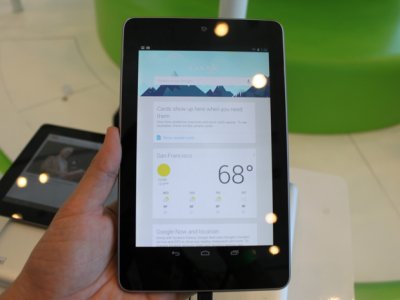
Round 1: Siri vs. Google Now
Siri has greatly improved. Apple is aiming to make the virtual assistant more than just a novelty. Siri's newest features include her ability to speak sports scores and standings.
In addition to keeping you on top of your favorite teams, Siri can also make a reservation for you at your favorite restaurant via OpenTable. And movie fans rejoice: Siri can let you know what movies are playing at your local theater.
Despite Siri's new additions, though, she is no match for Google Now.
Google Now gets to know you personally. It is
designed to be truly helpful. In addition to providing you with sports scores Google Now scans your calendar and lets you know when to leave so you'll
make your next appointment on time.
Check out our full analysis of Google Now.
Google Now is much more advanced than Siri. It can do so much more and truly gets to know you. Point for Google.
Score: Google: 1 Apple: 0
Round 2: Google Maps vs. Apple Maps
When we first found out Apple was developing its own Maps app, we were excited.
Then we actually saw the maps, and we were completely underwhelmed.
Apple has a long way to go if it wants Maps to be on par with Google. Apple's Maps don't include walking directions or transit directions and that's a big let down for a lot of users.
Google just recently revamped their Maps to include 3D mapping and offline maps. The offline maps are a killer feature, they are useful when you have no service.
Offline Maps, transit, and walking directions give Google a point in this category.
Score:
Google: 2
Apple: 0
 Round 3: Android Beam vs. Shared Photo Stream
Android Beam is an easy way to share videos and photos. Besides sharing photos and video, Android Beam lets you send pretty much any type of file from one phone to another. As long as your device supports NFC capabilities, you can beam away.
How Stuff Works spoke with Google and it told them, "You can sum up Beam as this: it's a feature that enables just about any type of proximity-based interaction."
Apple's Shared Photo Streams allows you to share only the photos you want, with whoever you choose. Think of it as Apple's private version of Instagram. Once you take a photo, it is uploaded to your Stream. You allow users to access certain photos.
Google's Beam wins out on this one too folks. Photo Stream is pretty cool but being able to share more than just photos with another device is awesome.
Score
:
Google: 3
Apple: 0
Round 4: Safari vs. Google Chrome
We reported yesterday that, Safari's new feature, i Cloud Tabs, now keeps your tabs in sync across your Mac, iPod, iPhone, and iPad. Safari also saves web pages, in addition to just links, with the offline Reading List feature.
Under the hood, Google vastly improved how its browser plays with the phone's hardware. Google's browser brings better HTML5 video support and improves performance, CPU, and memory efficiency.
Google's Chrome browser is made for fluid and responsive interaction with Web content. Chrome already synced your tabs across multiple devices.
This match up is pretty even. Safari is a robust and well-designed browser. Chrome is very good and works across multiple platforms.
We're giving Google a point on this one because it allows you to change your default browser and that is a killer feature.
Score:
Google: 4
Apple: 0
Round 5: Google's Camera and Gallery vs. Apple's Camera with Panorama
Photo quality depends on which device you have, so we won't compare that.
But Google has added some neat features to its actual camera app that makes the experience more pleasant. For example, when you focus on an object in Camera, a new animation gives you feedback on your focus state.
Apple's newest camera addition is a panoramic feature. Panorama lets you capture up to 240 degrees in one shot. You can even go vertically. Apple says it has made sure the hardware and software work together to help you get a nice high-res picture.
This one is a tough comparison. Apple's camera takes great pics because the hardware and software work together so well. Google can't achieve that same feat because they typically don't make the camera.
Point for Apple.
Score:
Google: 4
Apple: 1
Round 6: Google Notifications vs. Apple's Notification Center
Google's Notifications are awesome. It gives us quick and easy access to brightness, airplane mode, Bluetooth, data usage, and pretty much everything else we care about.
Apple's Notification Center on the other hand is just a hub for missed alerts. The feature we use the most is weather. Even with iOS 6's new social additions, Notification Center is still pretty boring.
Google gets the point for this one.
Score:
Google: 5
Apple: 1
Round 7: Apple's new Phone app vs. Google's Phone app
Apple has greatly improved its phone app. iOS 6 introduces a completely redesigned phone app. Now when you decline an incoming call you can instantly reply with a text message, or set a callback reminder.
Google has also added some neat features to its phone app. You can play voicemail messages directly from the Notification Center when you miss a call. A new notification lets you return the call or reply by SMS with a single touch. And as a result of Google's Project Butter, the dialpad is more responsive.
The features are pretty even on this one. We'll give them both a point for this round.
Score:
Google: 6
Apple: 2
Round 8: Google's App Store vs. Apple's App Store
Apple's App Store has over 700,000 apps. The store is supreme. Developers want to make apps for Apple and others are struggling to keep up.
With iOS 6, Apple has completely redesigned the look and feel of it's App Store, iTunes Store, and iBooks store. It's now much easier to browse the stores and find exactly what you're looking for. We really like the cross device compatibility.
Google revamped its app store, Google Play, a while back and bundled books, music, movies and TV shows into it. We like Google Play but are still unimpressed by the selection and quality of apps. Google has come a long way but still has a ways to go. We do love the Smart App Updates feature, which ensures that only the parts of an application that have changed will be downloaded.
Apple is the king of Apps. They get the point for this round.
Score:
Google: 6
Apple: 3
Round 9: Accessibility features

Accessibility features make it easier for people with vision, hearing, learning, and mobility disabilities to better use their devices.
With iOS 6 Apple has significantly improved its already stellar accessibility features. They have added a new feature called Guided Access. Apple puts it best: "Guided Access helps students with disabilities such as autism remain on task and focused on content. It allows a parent, teacher, or administrator to limit an iOS device to one app by disabling the Home button, as well as restrict touch input on certain areas of the screen."
Google has made accessibility a focus in Jelly Bean. Jelly Bean lets blind users use a "Gesture Mode" to navigate the OS using touch and swipe gestures in combination with speech output. Google has also added TalkBack, a screen reader for Android which supports gestures to trigger actions, to navigate applications, and traverse text.
Google has come a long way but Apple's accessibility features are robust and the company has put a lot of time and work into it.
Point for Apple.
Score:
Google: 6
Apple: 4
Round 10: FaceTime vs. Google Hangout
FaceTime is another Apple novelty. We used it for a while when we first got our iPhone 4 two years ago. But after the novelty wore off we find ourselves rarely using the feature.
FaceTime is one of those features that's nice to have but isn't a necessity.
We feel similarly about Google+ Hangouts but the features are just better. Hangouts lets you see live video streams of all participants in a Hangout. In addition, you can chat with up to nine friends at once.
Point for Google because they allow you to chat with up to nine people at once from your phone.
Score:
Google:
7
Apple: 4
So what's the score?
Final Score:
Google: 7
Apple: 4
So there you have it folks. I bet you didn't expect the outcome to end up like it did.
Overall Google's Android OS is much more robust and feature packed than Apple's.
Jelly Bean's updates are focused around speed. Google wanted to drastically improve the performance throughout the system and for the most part they achieved that.
Apple has polished its operating system and added a lot of nifty features but it is still struggling to keep up with Android.
We'll revisit this topic again after we've played with iOS 6 for an extended amount of time but right now Jelly Bean is our favorite.